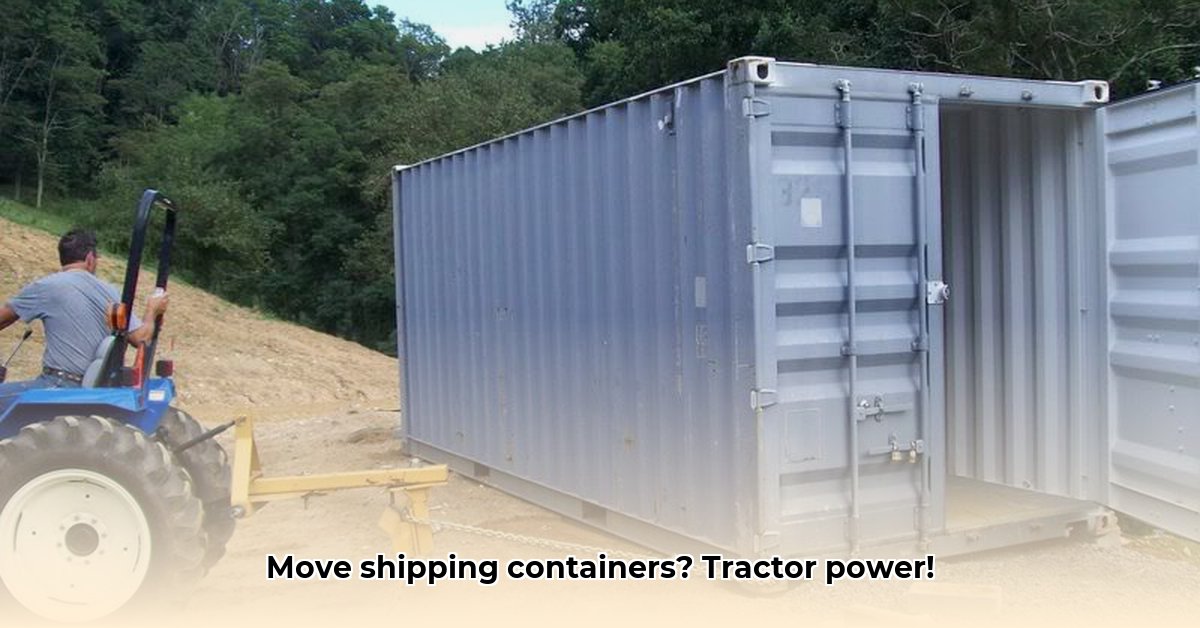
Moving shipping containers with a tractor can offer cost savings in specific situations, but it's inherently risky. This guide provides a step-by-step approach, prioritizing safety and outlining when professional assistance is crucial. Remember, this information is for guidance only and does not replace professional training or advice. Always prioritize safety. For more tractor operation tips, see this helpful guide: Tractor Operation Guide.
Feasibility Assessment: Is a Tractor the Right Tool?
Before attempting to move a shipping container with a tractor, conduct a thorough feasibility assessment. Using a tractor for this purpose is not always advisable, and often presents significant risks. Factors to consider include:
Container Weight: A standard 20-foot container weighs approximately 5,000 pounds empty, significantly more when loaded. Your tractor must have sufficient horsepower and weight capacity to safely handle the load. Check your tractor's owner's manual for weight limits—exceeding these is extremely dangerous.
Terrain: Uneven ground, inclines, soft soil, or obstacles drastically increase the risk of tipping or getting stuck. A perfectly flat, stable surface is mandatory. Even a slight slope can create instability.
Distance: Short distances are manageable, but longer hauls necessitate professional transport. The further a container needs to travel, the higher the risk of accident.
Tractor Capabilities: Does your tractor possess the necessary horsepower, a suitable hitch (likely a three-point hitch with spreader bars), and sufficient traction? A robust hydraulic system is vital. Insufficient power or the wrong equipment dramatically increases the risk of accidents.
Container Condition: Inspect the container for structural damage. A damaged container is inherently unstable and more likely to shift or collapse during transportation.
If you're unsure about any of these factors, do not proceed. The potential consequences of an accident far outweigh any cost savings. Hiring professionals is the safer and often more economical option in the long run. Isn't safety worth the investment?
If You Choose to Proceed (With Extreme Caution): A Detailed Guide
Disclaimer: This section provides information for educational purposes only. Attempting to move a shipping container with a tractor involves significant risks. Proceed at your own risk, and always prioritize safety. If you experience any doubt, stop immediately and seek professional assistance.
1. Pre-Move Checklist: Thorough Preparation is Crucial:
Tractor Inspection: Conduct a comprehensive inspection of your tractor, including brakes, hydraulics, tires, and all connecting components. Ensure everything is in perfect working order. Malfunctioning equipment can lead to catastrophic failure.
Container Inspection: Examine the container for any structural weaknesses, damage, or loose parts. Ensure the doors are secure and nothing will shift during transport.
Hitch and Attachments: Verify the suitability and condition of your three-point hitch, spreader bars, and any other attachments. These components must be rated for the container's weight.
Route Planning: Select a safe, level route free of obstacles. Avoid sharp turns, inclines, and uneven terrain.
Spotter: Always have a skilled spotter to guide you during the move, especially in areas with limited visibility. Their help is vital for preventing accidents.
2. Securing the Container: Safety Through Secure Attachment:
Straps and Chains: Use heavy-duty straps and chains rated for a load significantly exceeding the container's weight (at least double the weight capacity is recommended). Inspect for wear and tear before each use.
Attachment Technique: Secure the container to the tractor's three-point hitch using spreader bars for stability. Ensure even weight distribution to prevent swaying. Are you certain the securing mechanism is robust enough?
Multiple Points of Attachment: Use multiple secure points (at least four) to minimize the risk of shifting or dislodgement.
Double-Check Connections: After securing the container, meticulously double-check every connection. Loose connections are hazardous.
3. Maneuvering the Container: Slow and Steady Wins the Race:
Slow Speed: Maintain an extremely slow speed throughout the maneuver. Avoid sudden acceleration, braking, or jerky movements. Do you have the patience for this slow, cautious approach?
Wide Turns: Use extremely wide turns to avoid tipping and maximize stability. Plan your route carefully to minimize turns.
Obstacle Awareness: Maintain constant vigilance for obstacles. Even small bumps can cause accidents.
Communication: Keep communicating with your spotter throughout the maneuver. They should alert you to any potential hazards.
4. Post-Move Inspection: Damage Assessment:
Container Examination: After safely moving the container, inspect it for damage, including structural issues or dents.
Tractor Inspection: Examine the tractor's hitch, hydraulics, and other components for wear and tear or damage.
Surrounding Area: Inspect the area for ground damage or debris. Repair any damage immediately.
Safety Precautions: The Paramount Concern
Safety is paramount. The risks involved in moving shipping containers with a tractor cannot be overstated.
Training: Professional training in heavy equipment operation and load handling is highly recommended.
Experience: Only attempt this if you have extensive experience with tractors and heavy loads.
Proper Equipment: Use equipment suitable for the task and in perfect working condition.
Regulations: Comply with all local and national regulations regarding heavy goods transport.
Alternatives: Safer, Often More Efficient Choices
Consider safer alternatives:
Professional Movers: They have the expertise, equipment, and insurance to handle such tasks safely and efficiently.
Specialized Transportation: Companies specialize in transporting shipping containers using appropriate equipment.
Remember, prioritizing safety is crucial. While cost savings might be tempting, the potential consequences of an accident far outweigh any potential savings. Choose the safest approach.